
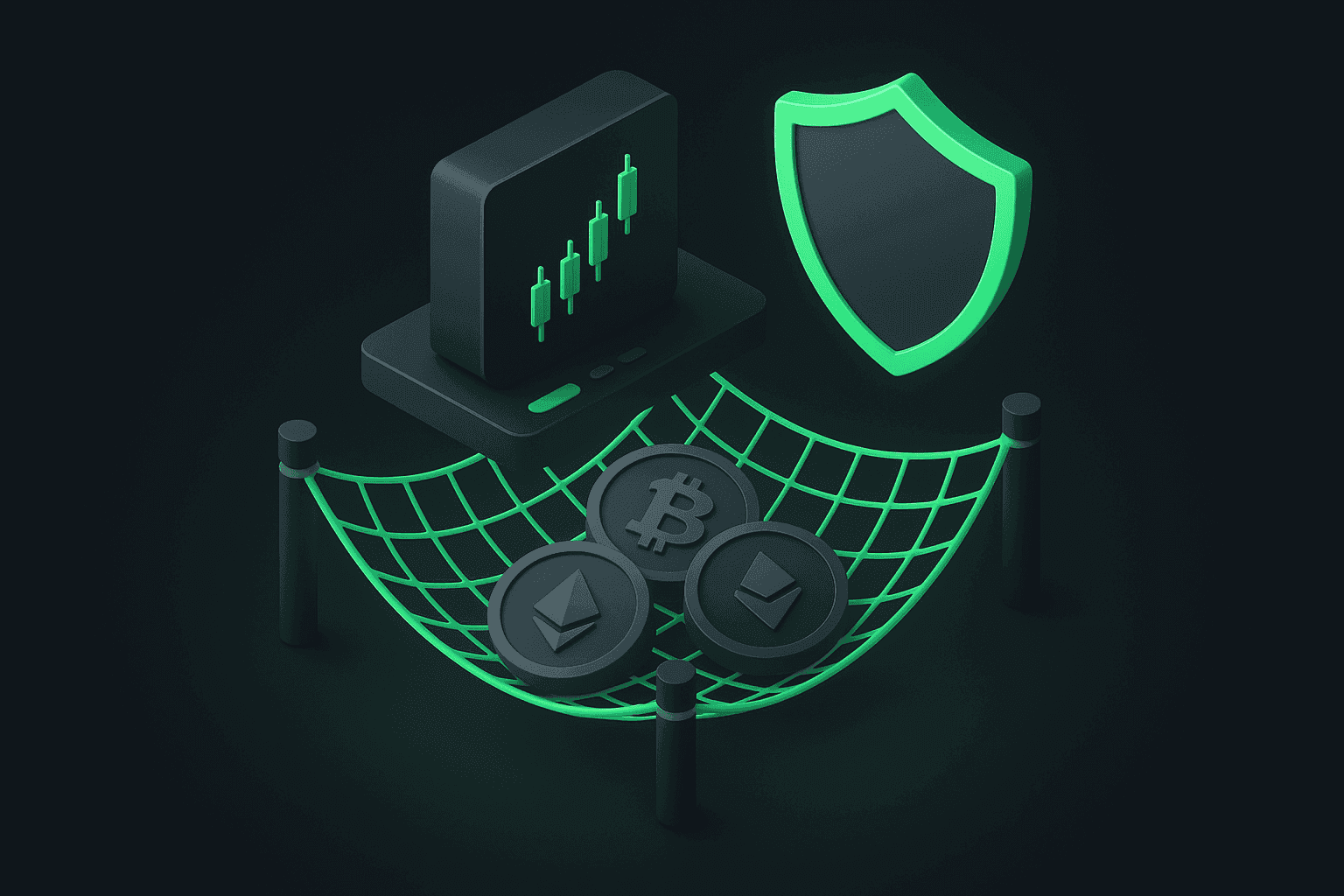
Crypto Exchange Insurance Funds: SAFU, FDIC और Beyond
जब crypto exchanges collapse हो जाते हैं, users अक्सर सब कुछ खो देते हैं। लेकिन कुछ platforms insurance funds maintain करते हैं जो extreme events के दौरान customer assets को protect करने के लिए design किए गए हैं। समझना कि actually क्या covered है—और क्या नहीं—आपको catastrophic losses से बचा सकता है।
Binance के SAFU fund से लेकर Coinbase की FDIC insurance तक, हम हर major exchange के protection mechanisms, उनकी limitations, और आपकी trading strategy के लिए उनका क्या मतलब है, इसे break down करते हैं।
Insurance Funds क्या हैं?
Crypto exchange insurance funds specific situations में users को compensate करने के लिए maintain किए गए reserves हैं—typically exchange hacks, operational failures, या extreme liquidation events। However, ये scope, funding, और legal enforceability में dramatically vary करते हैं।
Protection के Types
- Exchange Insurance Funds: Proprietary reserves (Binance SAFU, OKX Protection Fund)
- Government Insurance: Fiat deposits के लिए FDIC coverage (Coinbase, Gemini)
- Commercial Insurance: Specific risks cover करने वाली third-party policies
- Self-Insurance: Cold storage और operational security measures
ये Typically क्या Cover करते हैं
- Exchange security breaches और hacks
- Operational errors (double-spending, system failures)
- Employee theft या insider attacks
- कुछ platform liquidation scenarios
ये क्या Cover नहीं करते
- User errors: गलत addresses पर sending, lost passwords
- Market losses: Trading losses, liquidations, price volatility
- Regulatory shutdowns: Government-mandated closures
- Bankruptcy: Exchange insolvency (usually)
- Smart contract failures: DeFi protocol risks
Exchange-by-Exchange Breakdown
Binance - SAFU (Secure Asset Fund for Users)
Binance का SAFU fund crypto का सबसे famous insurance mechanism है, लेकिन इसका actual protection कई users के realize करने से अधिक limited है।
कैसे काम करता है
- Funding: Trading fees का 10% SAFU fund को allocate होता है
- Current Size: ~$1 billion (March 2026 तक)
- Coverage: Security breaches, extreme market events, operational risks
- Asset Types: BTC, BNB, BUSD, ETH reserves
Historical Usage
- 2019: $41 million hack SAFU से fully reimburse किया गया
- 2022: BNB Chain bridge hack losses cover किए गए
- 2025: October liquidation crisis partially cover किया गया (retail accounts)
Limitations
- No Legal Obligation: SAFU coverage discretionary है, guaranteed नहीं
- Finite Resources: $1B fund vs. $65B+ user assets में
- Selective Coverage: सभी losses reimburse नहीं होते
- Regulatory Risk: Legal disputes में SAFU freeze हो सकता है
| Coverage Type | Likelihood | Historical Precedent |
|---|---|---|
| Exchange hack | High | 2019 - Full reimbursement |
| System error | Medium | Various incidents covered |
| Market crash losses | Low | 2025 - Partial coverage only |
| Regulatory shutdown | Unknown | No precedent |
Coinbase - FDIC Insurance + Commercial Coverage
Coinbase US customers के लिए government और commercial insurance के combination के through सबसे comprehensive protection offer करता है।
FDIC Coverage
- क्या Covered है: Per customer $250,000 तक USD deposits
- Legal Status: Government-backed guarantee
- Scope: केवल fiat currency, crypto assets नहीं
- Triggers: Coinbase bank failure, crypto-related losses नहीं
Commercial Insurance
- Coverage: Hot storage में digital assets के लिए ~$320 million
- Provider: Lloyd's of London consortium
- Scope: Security breaches, employee theft, operational errors
- Limitations: केवल total crypto assets का ~2% cover करता है
इसका क्या मतलब है
अगर आप Coinbase पर USD hold करते हैं और Coinbase का bank fail हो जाता है, तो FDIC आपको $250,000 तक fully cover करता है। अगर hackers Coinbase के hot wallets से Bitcoin चुराते हैं, तो commercial insurance कुछ losses cover कर सकता है। अगर Coinbase bankrupt हो जाता है, तो insurance के बावजूद भी आपकी crypto risk में हो सकती है।
| Asset Type | Storage Location | Insurance Coverage | Max Protection |
|---|---|---|---|
| USD | Bank deposits | FDIC | $250,000 |
| Crypto | Hot wallets (2%) | Commercial | ~$320M total |
| Crypto | Cold storage (98%) | None | $0 |
Kraken - Conservative Approach
Kraken insurance के ऊपर security को emphasize करता है, believing कि prevention compensation से better है।
Security Measures
- Cold Storage: 95%+ assets offline storage में
- Air-Gapped Systems: Critical infrastructure internet से isolated
- Multi-Signature: Transactions के लिए multiple keys required
- Regular Audits: Third-party security assessments
Limited Insurance
- Coverage: Operational risks के लिए minimal commercial insurance
- Philosophy: "हम पहले place में hack होना prefer नहीं करते"
- Track Record: कभी successfully hack नहीं हुआ
Gemini - FDIC + Limited Commercial
Coinbase के similar, Gemini USD के लिए FDIC protection और crypto के लिए limited commercial coverage offer करता है।
- FDIC: USD deposits के लिए per customer $250,000
- Commercial: Hot wallet breaches के लिए undisclosed coverage
- Custody: Regulated trust company structure
- Segregation: Customer assets company assets से separately held
OKX - Protection Fund
OKX Binance के SAFU के similar proprietary insurance fund maintain करता है।
- Funding: Trading fees और company reserves
- Size: ~$500 million equivalent
- Coverage: Security incidents, extreme liquidations
- Transparency: Fund usage पर limited public reporting
Bybit - Insurance Fund
Bybit का insurance fund primarily derivatives trading में liquidation losses cover करता है।
- Purpose: Extreme liquidations के दौरान socialized losses prevent करना
- Funding: Liquidation fees, trading fees
- Scope: Derivatives trading, spot assets नहीं
- Transparency: Platform पर real-time fund balance displayed
BitMEX - Insurance Fund (Historical)
BitMEX ने derivatives insurance funds pioneer किए, हालांकि उनका model widely copy हो गया है।
- Innovation: First major derivatives insurance fund
- Mechanism: Liquidated positions से losses absorb करता है
- Transparency: Publicly viewable fund balance
- Limitations: Derivatives-only, extreme events में deplete हो सकता है
Regional Insurance Differences
United States
- FDIC Coverage: Bank partnerships वाले licensed exchanges के लिए available
- SIPC Coverage: Crypto assets पर applicable नहीं
- State Regulations: State के हिसाब से varying insurance requirements
European Union
- Deposit Guarantee Schemes: केवल traditional bank deposits तक limited
- MiCA Regulation: Insurance requirements introduce कर सकता है
- National Variations: EU countries में different requirements
Asia-Pacific
- Japan: Customer asset segregation required, limited insurance
- Singapore: Licensed exchanges के लिए operational risk requirements
- Australia: AFSL holders के पास appropriate insurance होना चाहिए
Insurance vs. Security: क्या अधिक Matter करता है?
Security-First Argument
कई security experts argue करते हैं कि robust preventive measures after-the-fact insurance से अधिक matter करते हैं:
- Prevention vs. Compensation: Losses से recover करने से बेहतर है उन्हें avoid करना
- Limited Coverage: Insurance rarely potential losses का 100% cover करता है
- Speed of Recovery: Insurance claims में months या years लग सकते हैं
- Legal Complexity: Insurance disputes lengthy और uncertain हो सकते हैं
Insurance-First Argument
अन्य financial backstops की importance emphasize करते हैं:
- Human Error: Even best security fail हो सकती है
- Insider Threats: Insurance employee theft cover कर सकता है
- Regulatory Protection: FDIC/government backing certainty provide करता है
- Business Continuity: Insurance exchanges को major incidents survive करने में help करता है
Balanced Approach
सबसे अच्छे exchanges strong security और meaningful insurance coverage दोनों combine करते हैं।
Exchange Protection को कैसे Evaluate करें
Security Assessment
- Cold Storage Percentage: Higher बेहतर है (90%+ ideal)
- Security Track Record: Past incidents की number और severity
- Third-Party Audits: External firms द्वारा regular security assessments
- Bug Bounty Programs: Vulnerabilities find करने के लिए rewards
Insurance Evaluation
- Coverage Amount: Total insured value vs. customer deposits
- Coverage Scope: कौन से specific risks covered हैं
- Legal Enforceability: Government vs. commercial vs. discretionary
- Historical Usage: क्या insurance actually pay out किया है?
Red Flags
- Vague Insurance Claims: Specifics के बिना "Fully insured"
- No Security Details: Security measures discuss करने की unwillingness
- Frequent Incidents: Security breaches या operational problems का pattern
- Regulatory Issues: Financial authorities के साथ ongoing disputes
Practical Protection Strategies
Insurance पर अकेले Rely न करें
Even best insurance की limitations हैं। अपना risk management implement करें:
- Diversify Across Exchanges: सभी assets एक platform पर न रखें
- Use Self-Custody: Long-term holdings के लिए hardware wallets
- Keep Trading Amounts Small: केवल active trading funds exchanges पर रखें
- Regular Withdrawals: Profits को regularly cold storage में move करें
Risk Tolerance के Based पर Exchanges Choose करें
Risk-Averse Users
- Priority: FDIC coverage (USD के लिए Coinbase, Gemini)
- Backup: Strong security वाले regulated exchanges (Kraken)
- Strategy: Exchange exposure minimize करें, hardware wallets use करें
Active Traders
- Primary: Good track records वाले large insurance funds (Binance SAFU)
- Secondary: Multiple insured platforms में diversify करें
- Strategy: Regular profit withdrawals, position sizing limits
DeFi Users
- Reality Check: DeFi protocols typically कोई insurance नहीं रखते
- Mitigation: Established protocols use करें, smart contract risks understand करें
- Insurance Options: Third-party DeFi insurance (Nexus Mutual, etc.)
Exchange Insurance का Future
Regulatory Trends
- Mandatory Insurance: Regulators minimum coverage levels require कर सकते हैं
- Standardized Reporting: Insurance terms की clearer disclosure
- Government Backstops: Crypto-specific deposit insurance की potential
Industry Innovations
- Proof of Reserves: Exchange solvency की real-time verification
- Decentralized Insurance: Peer-to-peer insurance protocols
- Parametric Insurance: Objective triggers के based पर automated payouts
Key Takeaways
- Insurance Universal नहीं है: Coverage exchanges और risk types के बीच dramatically vary करता है
- Fine Print Read करें: Marketing claims vs. actually covered को understand करें
- FDIC Different है: USD deposits के लिए government insurance exchange funds से stronger protection offer करता है
- Security अधिक Matter करती है: Prevention compensation से better है
- अपने Risk को Diversify करें: किसी single exchange या insurance mechanism पर rely न करें
- Holdings के लिए Self-Custody: Long-term storage के लिए hardware wallets use करें
Informed Decisions बनाना
Exchange insurance आपके platform selection में एक factor होना चाहिए, केवल factor नहीं। Insurance evaluation को हमारी comprehensive exchange rankings के साथ combine करें जो security, regulation, fees, और operational track record consider करती हैं।
Exchange security measures और insurance coverage के detailed comparisons के लिए, हमारे platform comparison tool का use करें। और याद रखें: सबसे अच्छा protection risks को understand करना और उससे अधिक risk न लेना है जितना आप afford कर सकते हैं।
Exchange security के बारे में और जानना चाहते हैं? हमारी exchange security guide और scoring methodology check करें यह understand करने के लिए कि हम exchange safety और reliability को कैसे evaluate करते हैं।