
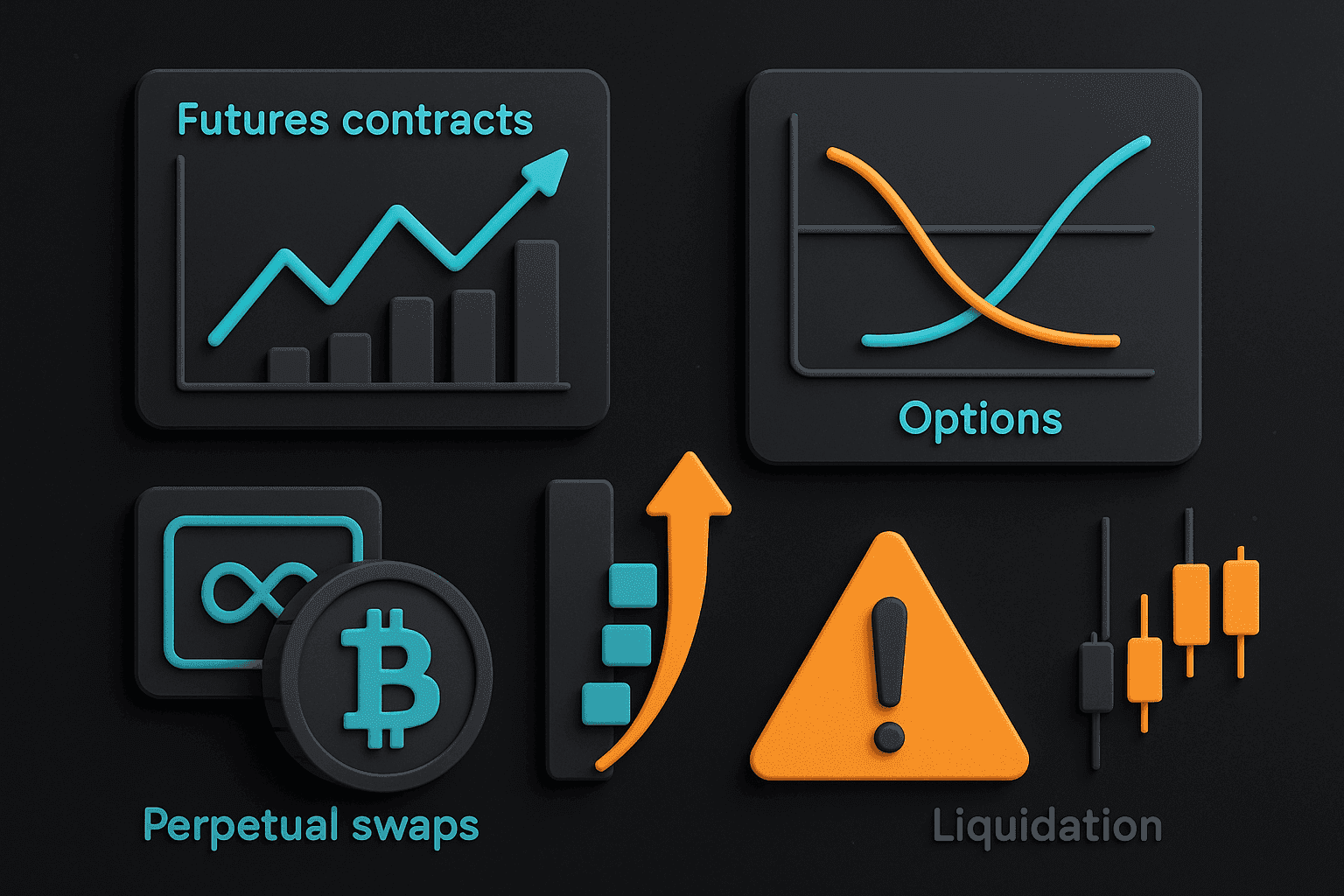
Exchange di Derivati e Futures Crypto Spiegati
I derivati crypto rappresentano il segmento più sofisticato e ad alto rischio del trading di asset digitali. Con leva fino a 100x o più, questi strumenti possono amplificare drammaticamente sia profitti che perdite. Comprendere i perpetual swap, i contratti futures, le opzioni e i loro rischi associati è cruciale prima di fare trading di derivati. Questa guida spiega come funzionano i derivati crypto, confronta i migliori exchange di derivati e fornisce strategie essenziali di gestione del rischio.
Copriremo le meccaniche dei diversi tipi di derivati, funding rate, sistemi di liquidazione e come valutare gli exchange di derivati per liquidità, commissioni e sicurezza. Per le nostre classifiche complete degli exchange inclusi le piattaforme di derivati, vedi /exchanges. Per indicazioni generali sulla selezione degli exchange, controlla il nostro framework decisionale.
Comprendere i Fondamenti dei Derivati Crypto
I derivati crypto sono contratti finanziari il cui valore è derivato dai prezzi delle criptovalute sottostanti. Permettono ai trader di speculare sui movimenti di prezzo, fare hedge delle posizioni e accedere alla leva senza possedere direttamente gli asset sottostanti.
Tipi di Derivati Crypto
Perpetual Swap (Futures Perpetui)
- Definizione: Contratti futures senza data di scadenza
- Meccanismo Funding: Pagamenti periodici tra posizioni long e short per mantenere il prezzo vicino allo spot
- Leva: Tipicamente da 1x a 100x+ a seconda di exchange e asset
- Settlement: Cash-settled, nessuna consegna fisica degli asset sottostanti
- Popolarità: Derivato crypto più popolare grazie all'assenza di date di scadenza
Futures Trimestrali/Mensili
- Definizione: Contratti futures con date di scadenza specifiche
- Settlement: Automaticamente regolati alla scadenza al prezzo indice
- Contango/Backwardation: I prezzi futures possono commerciare a premio o sconto rispetto allo spot
- Rischio Roll: Le posizioni devono essere rinnovate o chiuse prima della scadenza
- Casi d'uso: Hedging, arbitraggio e speculazione con orizzonti temporali definiti
Opzioni
- Definizione: Contratti che danno il diritto (non obbligo) di comprare/vendere a prezzo specifico
- Tipi: Call option (diritto di comprare) e Put option (diritto di vendere)
- Strike Price: Prezzi predeterminati ai quali le opzioni possono essere esercitate
- Premio: Costo per acquistare l'opzione
- Strategie Complesse: Permettono sofisticate strategie di hedging e reddito
Altri Derivati
- Prediction Market: Contratti binari su eventi specifici
- Prodotti Volatilità: Contratti basati su volatilità implicita o realizzata
- Derivati Tassi Interesse: Prodotti legati ai tassi di prestito DeFi
- Asset Sintetici: Esposizione tokenizzata ad asset tradizionali
Come Funziona la Leva nei Derivati Crypto
Requisiti Margine
- Margine Iniziale: Collaterale minimo richiesto per aprire posizioni
- Margine Mantenimento: Collaterale minimo per mantenere posizioni aperte
- Cross Margin: Tutte le posizioni condividono lo stesso pool margine
- Margine Isolato: Ogni posizione ha allocazione margine dedicata
- Portfolio Margin: Calcolo margine avanzato considerando correlazioni
Calcolo Leva
- Formula: Leva = Dimensione Posizione / Margine Depositato
- Esempio: Posizione $10.000 con margine $1.000 = leva 10x
- Leva Massima: Varia per exchange, asset e tipo account
- Aggiustamento Dinamico: Alcuni exchange aggiustano la leva in base alla dimensione posizione
Approfondimento Perpetual Swap
I perpetual swap dominano il volume trading derivati crypto. Comprendere le loro meccaniche è essenziale per il successo nel trading derivati.
Meccanismo Funding Rate
Il funding rate mantiene i prezzi dei perpetual swap vicini ai prezzi spot senza date di scadenza:
Come Funziona il Funding
- Direzione Pagamento: Quando il funding rate è positivo, i long pagano gli short; quando negativo, gli short pagano i long
- Frequenza Pagamento: Solitamente ogni 8 ore (3 volte al giorno)
- Calcolo: Basato sul premio/sconto del prezzo perpetual rispetto all'indice spot
- Componente Tasso Interesse: Piccola componente fissa (solitamente 0,01% giornaliero)
- Componente Premio: Componente variabile basata sulla differenza prezzo
Implicazioni Strategiche Funding Rate
- Carry Trade: Mantieni posizioni che ricevono funding positivo
- Sentiment Mercato: Funding persistentemente positivo indica sentiment rialzista
- Mean Reversion: Funding rate estremi spesso precedono inversioni prezzo
- Opportunità Arbitraggio: Differenze funding rate tra exchange
Mark Price vs Last Price
Comprendere i diversi meccanismi di prezzo previene liquidazioni non necessarie:
Sistema Mark Price
- Scopo: Prezzo equo utilizzato per liquidazioni e calcoli P&L non realizzati
- Calcolo: Solitamente basato su prezzo indice spot più basis funding
- Protezione Volatilità: Previene manipolazioni e liquidazioni irragionevoli
- Variazioni Exchange: Exchange diversi usano formule mark price leggermente diverse
Last Price
- Definizione: Ultimo prezzo trade eseguito sull'exchange derivati
- Esecuzione Ordini: Gli ordini si eseguono contro last price, non mark price
- Divergenza: Può differire significativamente dal mark price durante periodi volatili
- Impatto Trading: Comprendere questa differenza è cruciale per il piazzamento ordini
Meccanismi Liquidazione e Gestione Rischio
I sistemi di liquidazione sono critici per proteggere sia trader che exchange da perdite catastrofiche:
Come Funzionano le Liquidazioni
Trigger Liquidazione
- Rapporto Margine: Quando il rapporto margine scende sotto i requisiti mantenimento
- Basato su Mark Price: Liquidazioni basate su mark price, non last price
- Prezzo Bankruptcy: Prezzo teorico dove il margine sarebbe completamente perso
- Parziale vs Completo: Alcuni exchange usano liquidazioni parziali per ridurre dimensione posizione
Processo Liquidazione
- Margin Call: Avviso quando si avvicina la liquidazione (se fornito)
- Chiusura Automatica: L'exchange chiude automaticamente le posizioni
- Market vs Limit Order: Gli exchange possono usare diversi tipi ordine per liquidazioni
- Rischio Slippage: Posizioni grandi possono sperimentare slippage significativo
- Commissioni Liquidazione: Commissioni aggiuntive addebitate per posizioni liquidate
Insurance Fund e Perdite Socializzate
Meccanismi Assicurazione Exchange
- Insurance Fund: Pool di fondi per coprire posizioni che si liquidano oltre il prezzo bankruptcy
- Fonti Fund: Commissioni liquidazione, commissioni trading e contributi exchange
- Auto-Deleveraging (ADL): Sistema per chiudere posizioni profittevoli quando l'assicurazione è insufficiente
- Perdite Socializzate: Casi rari dove le perdite sono distribuite tra tutti gli utenti
Sistema ADL (Auto-Deleveraging)
- Condizioni Trigger: Quando l'insurance fund non può coprire le perdite liquidazione
- Criteri Selezione: Solitamente prende di mira prima le posizioni più profittevoli
- Chiusura Forzata: Posizioni profittevoli chiuse al prezzo bankruptcy
- Indicatori Rischio: Alcuni exchange mostrano livelli rischio ADL per le posizioni
Confronto Top Exchange Derivati
Exchange diversi eccellono in aspetti diversi del trading derivati:
Binance Futures
Punti di Forza
- Liquidità: Volume trading più alto nella maggior parte dei contratti principali
- Gamma Prodotti: Vasta selezione di perpetual e futures trimestrali
- Commissioni Basse: Struttura commissioni competitiva con sconti BNB
- Funzionalità Avanzate: Portfolio margin, opzioni e prediction market
- App Mobile: Piattaforma trading mobile comprensiva
Limitazioni
- Restrizioni Geografiche: Non disponibile in USA e alcune altre giurisdizioni
- Complessità: Può essere travolgente per principianti
- Rischio Normativo: Sfide normative in corso in vari paesi
Metriche Chiave
- Leva Massima: Fino a 125x per coppie principali
- Frequenza Funding: Ogni 8 ore
- Commissioni Maker/Taker: 0,02% / 0,04% (prima degli sconti)
- Insurance Fund: Insurance fund grande e trasparente
Bybit
Punti di Forza
- Focus Derivati: Costruito specificamente per trading derivati
- User Experience: Interfaccia intuitiva progettata per derivati
- Liquidità: Liquidità forte nei perpetual principali
- Gestione Rischio: Strumenti gestione rischio avanzati
- Risorse Educative: Educazione trading comprensiva
Limitazioni
- Restrizioni Geografiche: Disponibilità limitata in giurisdizioni regolamentate
- Trading Spot: Trading spot meno sviluppato rispetto ai derivati
- Incertezza Normativa: Posizione normativa long-term poco chiara
Metriche Chiave
- Leva Massima: Fino a 100x per coppie principali
- Frequenza Funding: Ogni 8 ore
- Commissioni Maker/Taker: -0,025% / 0,075% per perpetual USDT
- Funzionalità Uniche: Dual asset investment, copy trading
OKX
Punti di Forza
- Innovazione Prodotti: Prodotti e funzionalità derivati avanzati
- Trading Opzioni: Una delle migliori piattaforme opzioni crypto
- Portfolio Margin: Sistema calcolo margine sofisticato
- Liquidità: Buona liquidità attraverso prodotti multipli
- Presenza Globale: Presenza forte in Asia e altri mercati
Limitazioni
- Restrizioni USA: Non disponibile per utenti USA
- Complessità: Funzionalità avanzate possono confondere trader nuovi
- Supporto: Qualità supporto clienti può variare
Metriche Chiave
- Leva Massima: Fino a 100x per contratti popolari
- Frequenza Funding: Ogni 8 ore
- Commissioni Maker/Taker: 0,02% / 0,05% per futures
- Funzionalità Speciali: Catene opzioni estensive, integrazione DeFi
dYdX
Punti di Forza
- Decentramento: Trading non-custodial con self-custody
- No KYC: Trade senza verifica identità
- Trasparenza: Protocollo open-source con order book pubblico
- Innovazione: Tecnologia Layer 2 all'avanguardia
Limitazioni
- Asset Limitati: Meno coppie trading rispetto agli exchange centralizzati
- Liquidità: Liquidità inferiore rispetto ai CEX principali
- User Experience: Più complesso per trader tradizionali
- Costi Gas: Commissioni gas Ethereum per alcune operazioni
Metriche Chiave
- Leva Massima: Fino a 20x
- Frequenza Funding: Ogni ora
- Commissioni Maker/Taker: 0,02% / 0,05%
- Funzionalità Uniche: Self-custody, ricompense governance token
Strutture Commissioni nel Trading Derivati
Le commissioni derivati possono impattare significativamente la profittabilità, specialmente per trader ad alta frequenza:
Tipi di Commissioni Derivati
Commissioni Trading
- Commissioni Maker: Commissioni per ordini che aggiungono liquidità all'order book
- Commissioni Taker: Commissioni per ordini che rimuovono liquidità dall'order book
- Livelli Volume: Commissioni più basse per volumi trading maggiori
- Programmi VIP: Riduzioni commissioni aggiuntive per grandi trader
- Sconti Token Nativo: Riduzioni commissioni usando token exchange
Costi Funding
- Funding Rate: Pagamenti periodici tra posizioni long e short
- Variazione Rate: Può variare da -2% a +2% giornaliero in condizioni estreme
- Effetto Compounding: Costi funding giornalieri si accumulano nel tempo
- Impatto Strategico: Può fare o rompere strategie carry trade
Altri Costi
- Commissioni Liquidazione: Commissioni aggiuntive quando le posizioni sono liquidate
- Commissioni Settlement: Commissioni per contratti futures in scadenza
- Commissioni Exercise: Costi per esercitare contratti opzioni
- Commissioni Prelievo: Costi per spostare fondi fuori dall'exchange
Ottimizzazione Commissioni per Derivati
Benefici Strategia Maker
- Commissioni Negative: Alcuni exchange pagano rebate per ordini maker
- Esecuzione Migliore: Gli ordini limit spesso ottengono prezzi migliori degli ordini market
- Riduzione Slippage: Evitare slippage dagli ordini market
- Pazienza Richiesta: Gli ordini potrebbero non riempirsi immediatamente
Strategia Volume
- Benefici Tier: Volumi più alti sbloccano commissioni significativamente più basse
- Approccio Portfolio: Considera volume totale attraverso tutti i prodotti
- Trading Concentrato: Concentra volume su un exchange per benefici tier
- Analisi Costo-Beneficio: Assicurati che le strategie spinta volume siano profittevoli
Per strategie dettagliate di ottimizzazione commissioni, vedi la nostra guida ottimizzazione commissioni.
Gestione Rischio nel Trading Derivati
I derivati amplificano sia guadagni che perdite, rendendo la gestione del rischio assolutamente critica:
Position Sizing e Gestione Leva
La Regola dell'1%
- Rischio Per Trade: Non rischiare mai più dell'1-2% del saldo account per trade
- Calcolo Stop Loss: Dimensione Posizione = (Saldo Account × Rischio%) / Distanza Stop Loss
- Implicazioni Leva: Leva maggiore richiede dimensioni posizione più piccole
- Preservazione Account: Protegge contro sequenza di perdite
Applicazione Criterio Kelly
- Formula: f = (bp - q) / b, dove f = frazione capitale, b = quote ricevute, p = probabilità vincita, q = probabilità perdita
- Dimensionamento Ottimale: Determina matematicamente dimensione posizione ottimale
- Applicazione Conservativa: Usa frazione del risultato Kelly per ridurre volatilità
- Richiede Accuratezza: Serve stima accurata di win rate e win/loss medio
Strategie Stop Loss e Take Profit
Stop Loss Tecnici
- Livelli Supporto/Resistenza: Piazza stop oltre livelli tecnici chiave
- Medie Mobili: Usa rotture MA come segnali stop loss
- Stop Percentuali: Stop percentuali fissi dal prezzo entrata
- Stop Basati Volatilità: Distanze stop basate su ATR o Bollinger Band
Ottimizzazione Take Profit
- Rapporti Risk-Reward: Punta a rapporti reward-to-risk 2:1 o 3:1
- Presa Profitti Parziale: Chiudi porzioni di posizioni a livelli diversi
- Trailing Stop: Lascia correre i profitti proteggendo i guadagni
- Uscite Temporali: Chiudi posizioni dopo certi periodi tempo
Correlazione e Rischio Portfolio
Correlazioni Cross-Asset
- Correlazioni Crypto: La maggior parte delle altcoin correlano fortemente con Bitcoin
- Cambi Regime Mercato: Le correlazioni possono piccare durante periodi crisi
- Correlazioni Asset Tradizionali: Le crypto correlano sempre più con tech stock
- Asset Safe Haven: Oro, USD e bond come hedge portfolio
Strategie Diversificazione
- Strategie Non Correlate: Combina trend following con mean reversion
- Diversificazione Time Frame: Mixa posizioni short-term e long-term
- Diversificazione Exchange: Distribuisci rischio attraverso piattaforme multiple
- Diversificazione Asset Class: Combina crypto con asset tradizionali
Strategie Derivati Avanzate
I trader sofisticati possono implementare strategie complesse usando derivati:
Strategie Arbitraggio
Arbitraggio Cash and Carry
- Meccanismo: Compra spot, vendi futures quando i futures commerciano a premio
- Fonte Profitto: Cattura basis (differenza tra futures e spot)
- Profilo Rischio: Market-neutral, profitto dal time decay
- Requisiti Capitale: Serve capitale per margine spot e futures
Arbitraggio Funding Rate
- Strategia Long Funding: Mantieni posizioni che ricevono funding positivo
- Arbitraggio Cross-Exchange: Sfrutta differenze funding rate tra exchange
- Delta Hedging: Hedge rischio prezzo spot catturando funding
- Gestione Rischio: Monitora cambi funding rate e limiti posizione
Strategie Hedging
Portfolio Hedging
- Short Futures: Hedge posizioni spot long con futures short
- Correlation Hedging: Usa futures Bitcoin per hedge portfolio altcoin
- Tail Risk Hedging: Compra put out-of-the-money per protezione crash
- Dynamic Hedging: Aggiusta rapporti hedge basati su condizioni mercato
Cross-Asset Hedging
- Mercati Tradizionali: Hedge esposizione crypto con short asset tradizionali
- Currency Hedging: Gestisci esposizione a diverse valute base
- Volatility Hedging: Usa opzioni per hedge esposizione volatilità
- Interest Rate Hedging: Hedge costi funding con derivati rate
Strategie Opzioni
Strategie Opzioni Base
- Covered Call: Vendi call contro posizioni spot long
- Protective Put: Compra put per proteggere posizioni long
- Cash-Secured Put: Vendi put con collaterale cash
- Strangle/Straddle: Profitto da alta volatilità
Strategie Opzioni Avanzate
- Iron Condor: Profitto da bassa volatilità
- Calendar Spread: Sfrutta differenze time decay
- Ratio Spread: Profili payoff asimmetrici
- Volatility Trading: Trade volatilità implicita vs realizzata
Considerazioni Normative per Derivati
I derivati affrontano maggiore scrutinio normativo a livello globale:
Approcci Normativi Regionali
Stati Uniti
- Giurisdizione CFTC: I derivati ricadono sotto regolamentazione futures commodity
- Requisiti Registrazione: Le piattaforme devono registrarsi o cercare esenzioni
- Restrizioni Retail: Leva limitata e accesso prodotti per trader retail
- Qualified Contract Participants: Limiti più alti per trader istituzionali
Unione Europea
- MiFID II: Regolamentazione derivati comprensiva
- Linee Guida ESMA: Limiti leva e avvisi rischio
- Professional vs Retail: Regole diverse per tipi investitore diversi
- Intervento Prodotti: Restrizioni temporanee su prodotti alto rischio
Asia-Pacifico
- Approcci Variati: Framework normativi diversi attraverso i paesi
- Leadership Singapore: Framework chiaro per derivati istituzionali
- Restrizioni Giappone: Limiti leva stretti per trader retail
- Evoluzione Hong Kong: Sviluppo regolamentazioni crypto comprensive
Considerazioni Compliance
Selezione Piattaforma
- Posizione Normativa: Scegli piattaforme con licenze appropriate
- Restrizioni Geografiche: Assicura disponibilità piattaforma nella tua giurisdizione
- Funzionalità Compliance: Disclosure rischi appropriati e protezioni investitore
- Requisiti Reporting: Strumenti tax reporting e compliance normativa
Implicazioni Fiscali
- Mark-to-Market: Alcune giurisdizioni richiedono accounting mark-to-market giornaliero
- Contratti Sezione 1256: Trattamento fiscale USA per contratti futures qualificati
- Ordinario vs Capitale: Trattamento fiscale diverso basato su frequenza trading
- Reporting Internazionale: FBAR e altri requisiti compliance internazionali
Considerazioni Tecnologia e Infrastruttura
Il trading derivati richiede infrastruttura tecnologica robusta:
Tecnologia Piattaforma
Latenza e Velocità
- Velocità Esecuzione Ordini: Critica per successo trading derivati
- Servizi Colocation: Alcuni exchange offrono server co-locati
- Performance API: API bassa latenza per trading algoritmico
- Performance Mobile: App mobile responsive per monitoraggio posizioni
Sistemi Gestione Rischio
- Margine Tempo Reale: Calcoli e aggiornamenti margine istantanei
- Limiti Posizione: Applicazione automatica limiti posizione e ordini
- Controlli Rischio: Circuit breaker e protezioni volatilità
- Engine Liquidazione: Algoritmi liquidazione sofisticati
Setup Tecnologia Personale
Infrastruttura Trading
- Internet Affidabile: Connessioni internet ridondanti
- Ridondanza Hardware: Device backup e alimentatori
- Sistemi Monitoraggio: Strumenti monitoraggio posizioni e mercato
- Misure Sicurezza: Autenticazione forte e sicurezza device
Software Trading
- Piattaforme Professionali: Strumenti charting e analisi avanzati
- Strumenti Gestione Rischio: Monitoraggio portfolio e calcolo rischio
- Integrazione API: Algoritmi custom e strategie automatizzate
- Piani Backup: Metodi accesso alternativi durante outage
Punti Chiave
- Comprendi le meccaniche: Padroneggia funding rate, mark price e sistemi liquidazione prima di fare trading
- Inizia piccolo: Inizia con leva bassa e posizioni piccole per imparare
- La gestione rischio è fondamentale: Usa stop loss, dimensionamento posizione appropriato e diversificazione
- Scegli piattaforme attentamente: Considera liquidità, commissioni, regolamentazione e tecnologia
- Monitora costi funding: I funding rate possono impattare significativamente la profittabilità
- Rimani informato sulle regolamentazioni: Il panorama normativo si sta evolvendo rapidamente
- La tecnologia conta: Assicura di avere infrastruttura robusta per trading derivati
- Non rischiare mai più di quello che puoi permetterti di perdere: La leva può amplificare drammaticamente le perdite
Per confronti dettagliati di exchange derivati e le loro funzionalità, visita /exchanges. Per imparare a minimizzare i costi trading, vedi la nostra guida ottimizzazione commissioni. Per aiuto nella scelta di exchange che corrispondano alle tue esigenze, controlla il nostro framework selezione.