
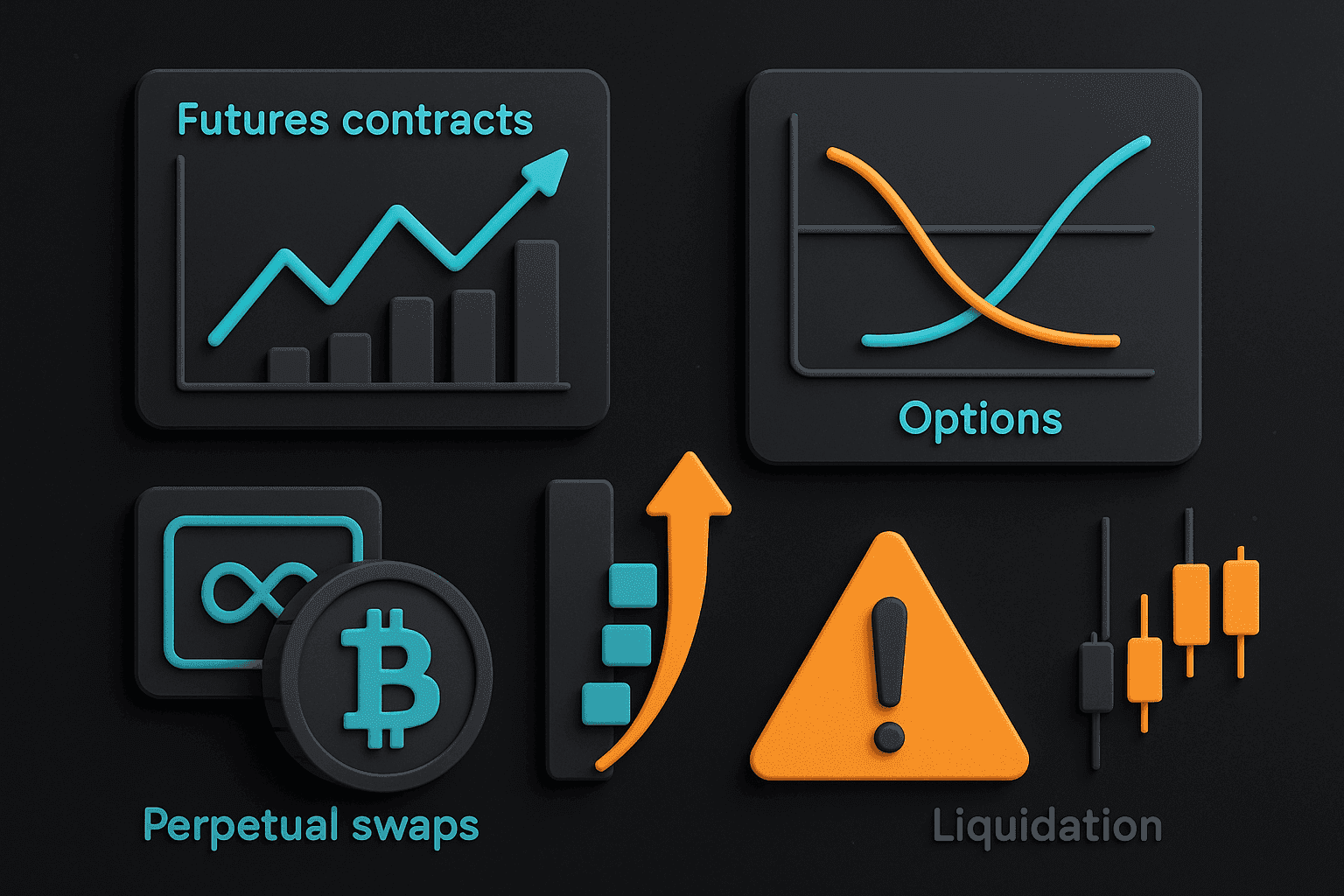
Crypto Derivatives & Futures Exchanges समझाया गया
Crypto derivatives digital asset trading के सबसे sophisticated और highest-risk segment को represent करते हैं। 100x या अधिक leverage के साथ, ये instruments profits और losses दोनों को dramatically amplify कर सकते हैं। Perpetual swaps, futures contracts, options, और उनके associated risks की understanding derivatives trading से पहले crucial है। यह guide explain करता है कि crypto derivatives कैसे काम करते हैं, top derivatives exchanges compare करता है, और essential risk management strategies provide करता है।
हम different derivative types के mechanics, funding rates, liquidation systems, और derivatives exchanges को liquidity, fees, और safety के लिए evaluate करने के तरीके cover करेंगे। Derivatives platforms सहित हमारी complete exchange rankings के लिए, /exchanges देखें। Exchange selection पर general guidance के लिए, हमारा decision framework check करें।
Crypto Derivatives Fundamentals समझना
Crypto derivatives financial contracts हैं जिनकी value underlying cryptocurrency prices से derive होती है। ये traders को price movements पर speculate करने, positions hedge करने, और underlying assets को directly own किए बिना leverage access करने की अनुमति देते हैं।
Crypto Derivatives के Types
Perpetual Swaps (Perpetual Futures)
- Definition: Futures contracts जिनकी कोई expiration date नहीं होती
- Funding Mechanism: Long और short positions के बीच periodic payments price को spot के near रखने के लिए
- Leverage: Typically 1x से 100x+ तक exchange और asset के आधार पर
- Settlement: Cash-settled, underlying assets की कोई physical delivery नहीं
- Popularity: No expiration dates के कारण सबसे popular crypto derivative
Quarterly/Monthly Futures
- Definition: Specific expiration dates वाले futures contracts
- Settlement: Expiration पर automatically index price पर settle होते हैं
- Contango/Backwardation: Futures prices spot से premium या discount पर trade हो सकती हैं
- Roll Risk: Positions को expiration से पहले roll या close करना होता है
- Use Cases: Defined time horizons के साथ hedging, arbitrage, और speculation
Options
- Definition: Contracts जो specific price पर buy/sell करने का right देते हैं (obligation नहीं)
- Types: Call options (buy करने का right) और Put options (sell करने का right)
- Strike Prices: Predetermined prices जिन पर options exercise किए जा सकते हैं
- Premium: Option purchase करने की cost
- Complex Strategies: Sophisticated hedging और income strategies enable करते हैं
Other Derivatives
- Prediction Markets: Specific events पर binary outcome contracts
- Volatility Products: Implied या realized volatility पर based contracts
- Interest Rate Derivatives: DeFi lending rates से tied products
- Synthetic Assets: Traditional assets का tokenized exposure
Crypto Derivatives में Leverage कैसे काम करता है
Margin Requirements
- Initial Margin: Positions open करने के लिए जरूरी minimum collateral
- Maintenance Margin: Positions open रखने के लिए minimum collateral
- Cross Margin: सभी positions same margin pool share करते हैं
- Isolated Margin: हर position का dedicated margin allocation होता है
- Portfolio Margin: Correlations consider करते हुए advanced margin calculation
Leverage Calculation
- Formula: Leverage = Position Size / Margin Posted
- Example: $1,000 margin के साथ $10,000 position = 10x leverage
- Maximum Leverage: Exchange, asset, और account type के अनुसार vary करता है
- Dynamic Adjustment: कुछ exchanges position size के आधार पर leverage adjust करते हैं
Perpetual Swaps Deep Dive
Perpetual swaps crypto derivatives trading volume पर dominate करते हैं। Derivatives trading success के लिए उनकी mechanics समझना essential है।
Funding Rate Mechanism
Funding rate perpetual swap prices को expiration dates के बिना spot prices के close रखता है:
Funding कैसे काम करता है
- Payment Direction: जब funding rate positive होता है, longs shorts को pay करते हैं; negative होने पर shorts longs को pay करते हैं
- Payment Frequency: Usually हर 8 hours (दिन में 3 बार)
- Calculation: Perpetual price के spot index के premium/discount पर based होता है
- Interest Rate Component: Small fixed component (usually 0.01% daily)
- Premium Component: Price difference के आधार पर variable component
Funding Rate Strategy Implications
- Carry Trades: Positive funding receive करने वाले positions hold करना
- Market Sentiment: Persistent positive funding bullish sentiment indicate करता है
- Mean Reversion: Extreme funding rates अक्सर price reversals से पहले आते हैं
- Arbitrage Opportunities: Exchanges के बीच funding rate differences
Mark Price vs Last Price
Different price mechanisms समझना unnecessary liquidations prevent करता है:
Mark Price System
- Purpose: Liquidation और unrealized P&L calculations के लिए used fair price
- Calculation: Usually spot index price plus funding basis पर based होता है
- Volatility Protection: Manipulation prevent करता है और unreasonable liquidations रोकता है
- Exchange Variations: Different exchanges slightly different mark price formulas use करते हैं
Last Price
- Definition: Derivatives exchange पर latest executed trade price
- Order Execution: Orders last price के against execute होते हैं, mark price के नहीं
- Divergence: Volatile periods के दौरान mark price से significantly differ हो सकती है
- Trading Impact: Order placement के लिए यह difference समझना crucial है
Liquidation Mechanisms और Risk Management
Liquidation systems traders और exchanges दोनों को catastrophic losses से protect करने के लिए critical हैं:
Liquidations कैसे काम करते हैं
Liquidation Triggers
- Margin Ratio: जब margin ratio maintenance requirements से नीचे गिर जाता है
- Mark Price Based: Liquidations mark price पर based होते हैं, last price पर नहीं
- Bankruptcy Price: Theoretical price जहाँ margin completely lost हो जाता है
- Partial vs Full: कुछ exchanges position size reduce करने के लिए partial liquidations use करते हैं
Liquidation Process
- Margin Call: Liquidation approach करते समय warning (अगर provided हो)
- Automatic Closure: Exchange automatically positions close करता है
- Market vs Limit Orders: Exchanges liquidations के लिए different order types use कर सकते हैं
- Slippage Risk: Large positions में significant slippage experience हो सकता है
- Liquidation Fees: Liquidated positions के लिए additional fees charge होती हैं
Insurance Funds और Socialized Losses
Exchange Insurance Mechanisms
- Insurance Fund: Bankruptcy price से beyond liquidate होने वाले positions cover करने के लिए funds का pool
- Fund Sources: Liquidation fees, trading fees, और exchange contributions
- Auto-Deleveraging (ADL): Insurance insufficient होने पर profitable positions close करने का system
- Socialized Losses: Rare cases जहाँ losses सभी users में distribute होते हैं
ADL (Auto-Deleveraging) System
- Trigger Conditions: जब insurance fund liquidation losses cover नहीं कर सकता
- Selection Criteria: Usually सबसे profitable positions को पहले target करता है
- Forced Closure: Profitable positions bankruptcy price पर close हो जाते हैं
- Risk Indicators: कुछ exchanges positions के लिए ADL risk levels show करते हैं
Top Derivatives Exchanges Compare करना
Different exchanges derivatives trading के different aspects में excel करते हैं:
Binance Futures
Strengths
- Liquidity: सबसे major contracts में highest trading volume
- Product Range: Perpetuals और quarterly futures का extensive selection
- Low Fees: BNB discounts के साथ competitive fee structure
- Advanced Features: Portfolio margin, options, और prediction markets
- Mobile App: Comprehensive mobile trading platform
Limitations
- Geographic Restrictions: US और कुछ अन्य jurisdictions में available नहीं
- Complexity: Beginners के लिए overwhelming हो सकता है
- Regulatory Risk: Various countries में ongoing regulatory challenges
Key Metrics
- Maximum Leverage: Major pairs के लिए 125x तक
- Funding Frequency: हर 8 hours
- Maker/Taker Fees: 0.02% / 0.04% (discounts से पहले)
- Insurance Fund: Large, transparent insurance fund
Bybit
Strengths
- Derivatives Focus: Specifically derivatives trading के लिए built किया गया
- User Experience: Derivatives के लिए designed intuitive interface
- Liquidity: Major perpetuals में strong liquidity
- Risk Management: Advanced risk management tools
- Educational Resources: Comprehensive trading education
Limitations
- Geographic Restrictions: Regulated jurisdictions में limited availability
- Spot Trading: Derivatives के compared में less developed spot trading
- Regulatory Uncertainty: Unclear long-term regulatory standing
Key Metrics
- Maximum Leverage: Major pairs के लिए 100x तक
- Funding Frequency: हर 8 hours
- Maker/Taker Fees: USDT perpetuals के लिए -0.025% / 0.075%
- Unique Features: Dual asset investment, copy trading
OKX
Strengths
- Product Innovation: Advanced derivatives products और features
- Options Trading: सबसे अच्छे crypto options platforms में से एक
- Portfolio Margin: Sophisticated margin calculation system
- Liquidity: Multiple products में good liquidity
- Global Presence: Asia और अन्य markets में strong presence
Limitations
- US Restrictions: US users के लिए available नहीं
- Complexity: Advanced features newer traders को confuse कर सकते हैं
- Support: Customer support quality vary हो सकती है
Key Metrics
- Maximum Leverage: Popular contracts के लिए 100x तक
- Funding Frequency: हर 8 hours
- Maker/Taker Fees: Futures के लिए 0.02% / 0.05%
- Special Features: Extensive options chains, DeFi integration
dYdX
Strengths
- Decentralization: Self-custody के साथ non-custodial trading
- No KYC: Identity verification के बिना trade करना
- Transparency: Public order book के साथ open-source protocol
- Innovation: Cutting-edge Layer 2 technology
Limitations
- Limited Assets: Centralized exchanges से कम trading pairs
- Liquidity: Major CEXs से lower liquidity
- User Experience: Traditional traders के लिए अधिक complex
- Gas Costs: कुछ operations के लिए Ethereum gas fees
Key Metrics
- Maximum Leverage: 20x तक
- Funding Frequency: हर hour
- Maker/Taker Fees: 0.02% / 0.05%
- Unique Features: Self-custody, governance token rewards
Derivatives Trading में Fee Structures
Derivatives fees profitability को significantly impact कर सकती हैं, खासकर high-frequency traders के लिए:
Derivatives Fees के Types
Trading Fees
- Maker Fees: Order book में liquidity add करने वाले orders के लिए fees
- Taker Fees: Order book से liquidity remove करने वाले orders के लिए fees
- Volume Tiers: Higher trading volumes के लिए lower fees
- VIP Programs: Large traders के लिए additional fee reductions
- Native Token Discounts: Exchange tokens use करने के लिए fee reductions
Funding Costs
- Funding Rates: Long और short positions के बीच periodic payments
- Rate Variation: Extreme conditions में -2% से +2% daily तक range कर सकता है
- Compounding Effect: Daily funding costs time के साथ accumulate होते हैं
- Strategy Impact: Carry trade strategies को make या break कर सकता है
Other Costs
- Liquidation Fees: Positions liquidate होने पर additional fees
- Settlement Fees: Expiring futures contracts के लिए fees
- Exercise Fees: Options contracts exercise करने की costs
- Withdrawal Fees: Exchange से funds move करने की costs
Derivatives के लिए Fee Optimization
Maker Strategy Benefits
- Negative Fees: कुछ exchanges maker orders के लिए rebates pay करते हैं
- Better Execution: Limit orders अक्सर market orders से better prices देते हैं
- Slippage Reduction: Market orders से slippage avoid करना
- Patience Required: Orders immediately fill नहीं हो सकते
Volume Strategy
- Tier Benefits: Higher volumes significantly lower fees unlock करते हैं
- Portfolio Approach: सभी products में total volume consider करना
- Concentrated Trading: Tier benefits के लिए एक exchange पर volume focus करना
- Cost-Benefit Analysis: Ensure करना कि volume push strategies profitable हैं
Detailed fee optimization strategies के लिए, हमारी fee optimization guide देखें।
Derivatives Trading में Risk Management
Derivatives gains और losses दोनों को amplify करते हैं, risk management को absolutely critical बनाते हैं:
Position Sizing और Leverage Management
1% Rule
- Risk Per Trade: कभी भी per trade account balance के 1-2% से ज्यादा risk न करें
- Stop Loss Calculation: Position size = (Account Balance × Risk%) / Stop Loss Distance
- Leverage Implications: Higher leverage smaller position sizes require करता है
- Account Preservation: Losses के sequence से protect करता है
Kelly Criterion Application
- Formula: f = (bp - q) / b, जहाँ f = capital का fraction, b = received odds, p = win की probability, q = loss की probability
- Optimal Sizing: Mathematically optimal position size determine करता है
- Conservative Application: Volatility reduce करने के लिए Kelly result का fraction use करना
- Requires Accuracy: Win rate और average win/loss के accurate estimates चाहिए
Stop Loss और Take Profit Strategies
Technical Stop Losses
- Support/Resistance Levels: Key technical levels से beyond stops place करना
- Moving Averages: MA breaks को stop loss signals के रूप में use करना
- Percentage Stops: Entry price से fixed percentage stops
- Volatility-Based Stops: ATR या Bollinger Band-based stop distances
Take Profit Optimization
- Risk-Reward Ratios: 2:1 या 3:1 reward-to-risk ratios target करना
- Partial Profit Taking: Different levels पर positions के portions close करना
- Trailing Stops: Gains protect करते हुए profits run करने देना
- Time-Based Exits: Certain time periods के बाद positions close करना
Correlation और Portfolio Risk
Cross-Asset Correlations
- Crypto Correlations: सबसे altcoins Bitcoin के साथ strongly correlate करते हैं
- Market Regime Changes: Crisis periods के दौरान correlations spike हो सकते हैं
- Traditional Asset Correlations: Crypto increasingly tech stocks के साथ correlate करता है
- Safe Haven Assets: Portfolio hedges के रूप में gold, USD, और bonds
Diversification Strategies
- Uncorrelated Strategies: Trend following को mean reversion के साथ combine करना
- Time Frame Diversification: Short-term और long-term positions mix करना
- Exchange Diversification: Multiple platforms में risk spread करना
- Asset Class Diversification: Crypto को traditional assets के साथ combine करना
Advanced Derivatives Strategies
Sophisticated traders derivatives use करके complex strategies implement कर सकते हैं:
Arbitrage Strategies
Cash and Carry Arbitrage
- Mechanism: Spot buy करना, futures sell करना जब futures premium पर trade करें
- Profit Source: Basis capture करना (futures और spot के बीच difference)
- Risk Profile: Market-neutral, time decay से profits
- Capital Requirements: Spot और futures margin दोनों के लिए capital चाहिए
Funding Rate Arbitrage
- Long Funding Strategy: Positive funding receive करने वाले positions hold करना
- Cross-Exchange Arbitrage: Exchanges के बीच funding rate differences exploit करना
- Delta Hedging: Funding capture करते हुए spot price risk hedge करना
- Risk Management: Funding rate changes और position limits monitor करना
Hedging Strategies
Portfolio Hedging
- Short Futures: Short futures के साथ long spot positions hedge करना
- Correlation Hedging: Altcoin portfolios hedge करने के लिए Bitcoin futures use करना
- Tail Risk Hedging: Crash protection के लिए out-of-the-money puts buy करना
- Dynamic Hedging: Market conditions के आधार पर hedge ratios adjust करना
Cross-Asset Hedging
- Traditional Markets: Traditional asset shorts के साथ crypto exposure hedge करना
- Currency Hedging: Different base currencies का exposure manage करना
- Volatility Hedging: Volatility exposure hedge करने के लिए options use करना
- Interest Rate Hedging: Rate derivatives के साथ funding costs hedge करना
Options Strategies
Basic Options Strategies
- Covered Calls: Long spot positions के against calls sell करना
- Protective Puts: Long positions protect करने के लिए puts buy करना
- Cash-Secured Puts: Cash collateral के साथ puts sell करना
- Strangles/Straddles: High volatility से profit करना
Advanced Options Strategies
- Iron Condors: Low volatility से profit करना
- Calendar Spreads: Time decay differences exploit करना
- Ratio Spreads: Asymmetric payoff profiles
- Volatility Trading: Implied vs realized volatility trade करना
Derivatives के लिए Regulatory Considerations
Derivatives globally increased regulatory scrutiny face करते हैं:
Regional Regulatory Approaches
United States
- CFTC Jurisdiction: Derivatives commodity futures regulation के under आते हैं
- Registration Requirements: Platforms को register करना होता है या exemptions seek करने होते हैं
- Retail Restrictions: Retail traders के लिए limited leverage और product access
- Qualified Contract Participants: Institutional traders के लिए higher limits
European Union
- MiFID II: Comprehensive derivatives regulation
- ESMA Guidelines: Leverage limits और risk warnings
- Professional vs Retail: Different investor types के लिए different rules
- Product Intervention: High-risk products पर temporary restrictions
Asia-Pacific
- Varied Approaches: Countries में different regulatory frameworks
- Singapore Leadership: Institutional derivatives के लिए clear framework
- Japan Restrictions: Retail traders के लिए strict leverage limits
- Hong Kong Evolution: Comprehensive crypto regulations develop करना
Compliance Considerations
Platform Selection
- Regulatory Standing: Appropriate licenses वाले platforms choose करना
- Geographic Restrictions: अपनी jurisdiction में platform availability ensure करना
- Compliance Features: Proper risk disclosures और investor protections
- Reporting Requirements: Tax reporting और regulatory compliance tools
Tax Implications
- Mark-to-Market: कुछ jurisdictions daily mark-to-market accounting require करते हैं
- Section 1256 Contracts: Qualified futures contracts के लिए US tax treatment
- Ordinary vs Capital: Trading frequency के आधार पर different tax treatment
- International Reporting: FBAR और अन्य international compliance requirements
Technology और Infrastructure Considerations
Derivatives trading robust technology infrastructure require करता है:
Platform Technology
Latency और Speed
- Order Execution Speed: Derivatives trading success के लिए critical
- Colocation Services: कुछ exchanges co-located servers offer करते हैं
- API Performance: Algorithmic trading के लिए low-latency APIs
- Mobile Performance: Position monitoring के लिए responsive mobile apps
Risk Management Systems
- Real-Time Margin: Instant margin calculations और updates
- Position Limits: Position और order limits की automatic enforcement
- Risk Controls: Circuit breakers और volatility protections
- Liquidation Engines: Sophisticated liquidation algorithms
Personal Technology Setup
Trading Infrastructure
- Reliable Internet: Redundant internet connections
- Hardware Redundancy: Backup devices और power supplies
- Monitoring Systems: Position और market monitoring tools
- Security Measures: Strong authentication और device security
Trading Software
- Professional Platforms: Advanced charting और analysis tools
- Risk Management Tools: Portfolio monitoring और risk calculation
- API Integration: Custom algorithms और automated strategies
- Backup Plans: Outages के दौरान alternative access methods
Key Takeaways
- Mechanics समझें: Trading से पहले funding rates, mark price, और liquidation systems master करें
- Small start करें: Learn करने के लिए low leverage और small positions से begin करें
- Risk management paramount है: Stop losses, proper position sizing, और diversification use करें
- Platforms carefully choose करें: Liquidity, fees, regulation, और technology consider करें
- Funding costs monitor करें: Funding rates profitability को significantly impact कर सकती हैं
- Regulations पर informed रहें: Regulatory landscape rapidly evolving है
- Technology matters: Derivatives trading के लिए robust infrastructure ensure करें
- कभी भी afford से ज्यादा risk न करें: Leverage losses को dramatically amplify कर सकता है
Derivatives exchanges और उनकी features के detailed comparisons के लिए, /exchanges visit करें। Trading costs minimize करने के बारे में जानने के लिए, हमारी fee optimization guide देखें। आपकी जरूरतों के match करने वाले exchanges choose करने में help के लिए, हमारा selection framework check करें।