
Spot vs Margin Trading on Crypto Exchanges
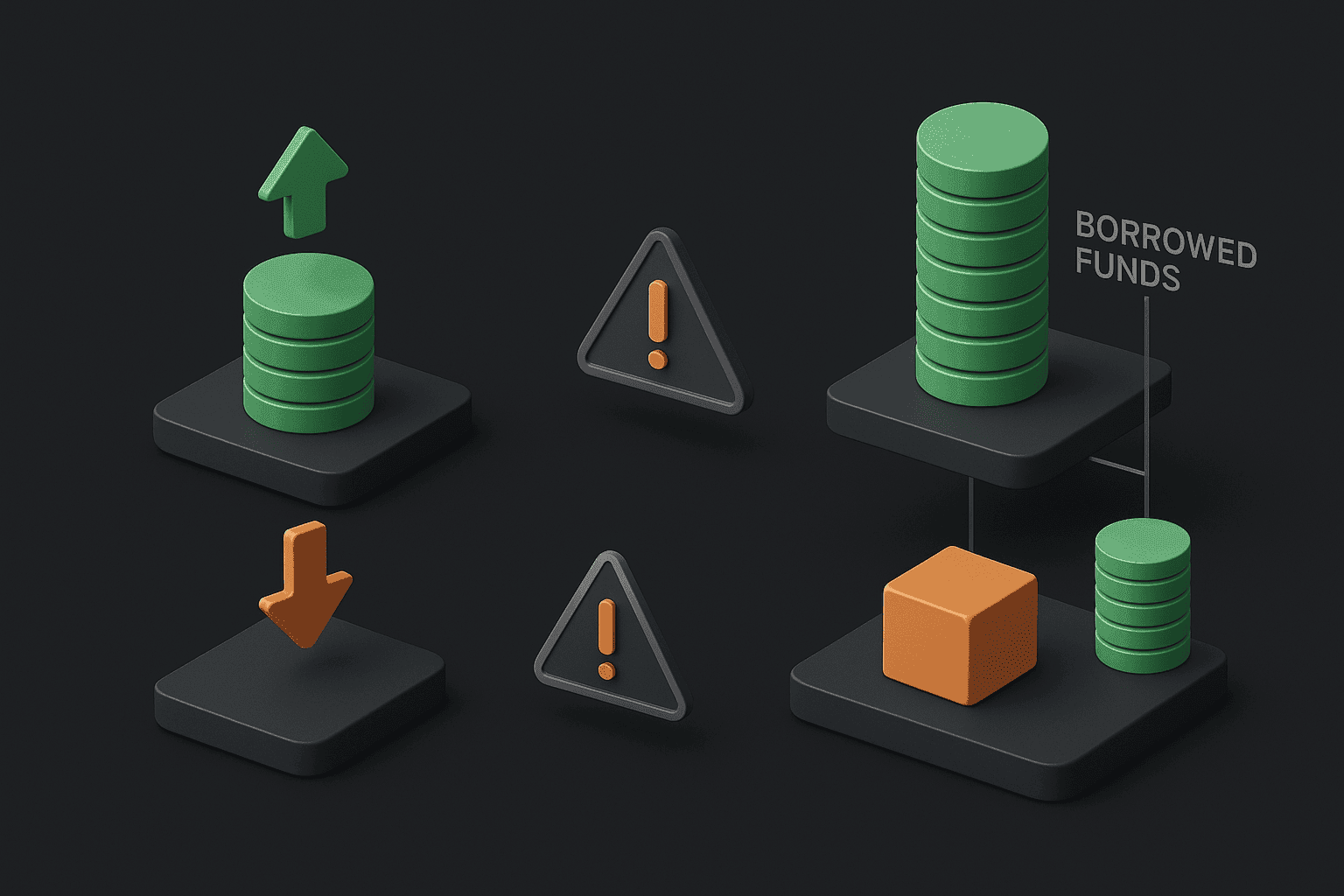
Spot and margin trading represent the two fundamental approaches to buying and selling cryptocurrencies on exchanges. Spot trading involves direct ownership of assets using your available funds, while margin trading allows you to borrow funds to amplify your positions. Understanding the mechanics, risks, and appropriate use cases for each approach is essential for making informed trading decisions and managing your portfolio effectively.
How Spot Trading Works
Spot trading is the most straightforward form of crypto trading where you buy or sell cryptocurrencies for immediate delivery at current market prices. When you purchase 1 BTC in the spot market, you own 1 BTC outright and can withdraw it to your personal wallet, stake it, or hold it indefinitely. Your maximum loss is limited to the amount you invested, and you cannot lose more than your account balance.
Spot Order Types
Most exchanges offer several order types for spot trading, each serving different strategic purposes:
- Market orders: Execute immediately at the best available price, providing certainty of execution but uncertainty of exact price
- Limit orders: Execute only at your specified price or better, giving you price control but no guarantee of execution
- Stop-loss orders: Trigger a market or limit order when price hits a specified level, helping manage downside risk
- Stop-limit orders: Combine stop and limit functionality, triggering a limit order at your stop price
- Iceberg orders: Break large orders into smaller portions to minimize market impact
Advantages of Spot Trading
- True ownership: You own the actual cryptocurrency and can transfer it off the exchange
- No liquidation risk: Your positions cannot be forcibly closed by the exchange
- No borrowing costs: You pay only trading fees, with no interest or funding rates
- Simplicity: Straightforward buy-and-hold strategy without complex margin calculations
- Lower minimum requirements: Most exchanges have minimal balance requirements for spot trading
Margin Trading Fundamentals
Margin trading allows you to borrow funds from the exchange to increase your buying power beyond your account balance. If you deposit $1,000 and use 10x leverage, you can control $10,000 worth of cryptocurrency positions. This amplifies both potential profits and potential losses, making margin trading significantly riskier than spot trading.
Cross Margin vs Isolated Margin
Exchanges typically offer two margin modes, each with distinct risk profiles and use cases:
Cross Margin
Cross margin pools your entire account balance as collateral for all open positions. This provides maximum flexibility and allows profitable positions to support losing ones, potentially preventing liquidation. However, a single large loss can affect your entire account balance.
- Pros: Higher liquidation threshold, positions support each other, maximum leverage efficiency
- Cons: Total account exposure, complex risk management, harder to isolate strategies
- Best for: Experienced traders managing multiple correlated positions
Isolated Margin
Isolated margin restricts each position's collateral to a specific amount you allocate. Losses are limited to the margin allocated to that specific trade, protecting the rest of your account balance from individual position failures.
- Pros: Limited risk per position, easier position management, clearer profit/loss attribution
- Cons: Lower leverage efficiency, positions cannot support each other, requires active margin management
- Best for: Beginners, position-specific strategies, risk compartmentalization
Margin Trading Mechanics
Leverage and Position Sizing
Leverage ratios determine how much you can borrow relative to your collateral. Common leverage levels include:
| Leverage | Collateral Required | Liquidation Threshold | Risk Level |
|---|---|---|---|
| 2x | 50% | ~50% move against you | Low |
| 5x | 20% | ~20% move against you | Medium |
| 10x | 10% | ~10% move against you | High |
| 25x | 4% | ~4% move against you | Very High |
Interest and Funding Costs
Margin positions incur borrowing costs that can significantly impact profitability:
- Interest rates: Typically 0.01-0.1% daily, varying by asset and market conditions
- Funding rates: Additional costs for perpetual futures, usually every 8 hours
- Compound effect: Costs accumulate over time, making long-term margin positions expensive
Risk Management Strategies
Position Sizing
Proper position sizing is crucial for margin trading survival. A common rule is the 1-2% risk rule: never risk more than 1-2% of your total account balance on any single trade. With 10x leverage, this means using only 0.1-0.2% of your balance as margin collateral per position.
Stop-Loss and Take-Profit Orders
Automated order management becomes critical with leveraged positions:
- Stop-loss: Set at a level that limits losses to your predetermined risk tolerance
- Take-profit: Lock in gains at predetermined targets to avoid giving back profits
- Trailing stops: Adjust stop levels as positions move in your favor
Margin Level Monitoring
Most exchanges provide real-time margin level indicators:
- Margin ratio: Equity / Used margin - higher is safer
- Maintenance margin: Minimum equity required to keep positions open
- Liquidation price: Price level where positions will be automatically closed
Exchange Comparison: Margin Features
| Exchange | Max Leverage | Margin Types | Interest Rates | Liquidation Fee |
|---|---|---|---|---|
| Binance | 125x | Cross, Isolated | 0.01-0.1%/day | 0.5-1.0% |
| Bybit | 100x | Cross, Isolated | 0.01-0.075%/day | 0.5% |
| OKX | 125x | Cross, Isolated, Portfolio | 0.01-0.1%/day | 1.0% |
| Kraken | 5x | Cross only | 0.02%/4hrs | 0.5% |
| Coinbase Pro | 3x | Cross only | 0.5-8.0%/year | N/A |
When to Use Spot vs Margin Trading
Choose Spot Trading When:
- Long-term investing: Building a portfolio for months or years
- Risk aversion: You cannot afford to lose more than your initial investment
- Learning: You're new to crypto trading and want to understand market dynamics
- Staking/yielding: You want to earn rewards from holding cryptocurrencies
- Dollar-cost averaging: Making regular purchases regardless of price
Choose Margin Trading When:
- Active trading: You monitor positions closely and can react quickly to market moves
- Market timing: You have strong conviction about short-term price direction
- Capital efficiency: You want to maximize returns from limited capital
- Hedging: You're using leverage to hedge existing crypto holdings
- Experience: You understand margin mechanics and have a proven risk management strategy
Common Mistakes to Avoid
Overleveraging
Using maximum available leverage is the fastest way to lose money in crypto trading. High leverage means small price movements can liquidate your entire position. Start with low leverage (2-5x) and increase gradually as you gain experience.
Ignoring Funding Costs
Margin positions incur daily interest charges that compound over time. A profitable trade can become unprofitable if held too long due to accumulating costs. Factor these expenses into your profit targets and holding periods.
No Stop-Loss Orders
Hoping losing positions will recover is particularly dangerous with leverage. Always set stop-loss orders before entering positions, and don't move them against your position if the trade goes wrong.
Emotional Trading
Leverage amplifies emotions as much as it amplifies profits and losses. Develop a systematic approach to position sizing, entry/exit rules, and risk management before you need them in live trading.
Getting Started with Margin Trading
If you decide to explore margin trading, start conservatively:
- Paper trade first: Practice with simulated funds to understand mechanics without risk
- Start small: Use minimal position sizes and low leverage initially
- Choose isolated margin: Limit risk exposure while learning
- Set strict rules: Define maximum loss per trade and stick to it
- Track performance: Keep detailed records of all trades and analyze your results
Platform Selection
Choose exchanges based on your trading style and experience level. Regulated platforms likeKraken and Coinbase offer lower leverage but stronger user protections. Dedicated derivatives exchanges like Binanceand Bybit provide advanced margin tools but require greater caution.
Our exchange comparison tool includes detailed margin trading features, fees, and safety scores to help you select the right platform for your needs. Remember that our CryptoScore methodology weights risk management and user protection highly when ranking exchanges.