
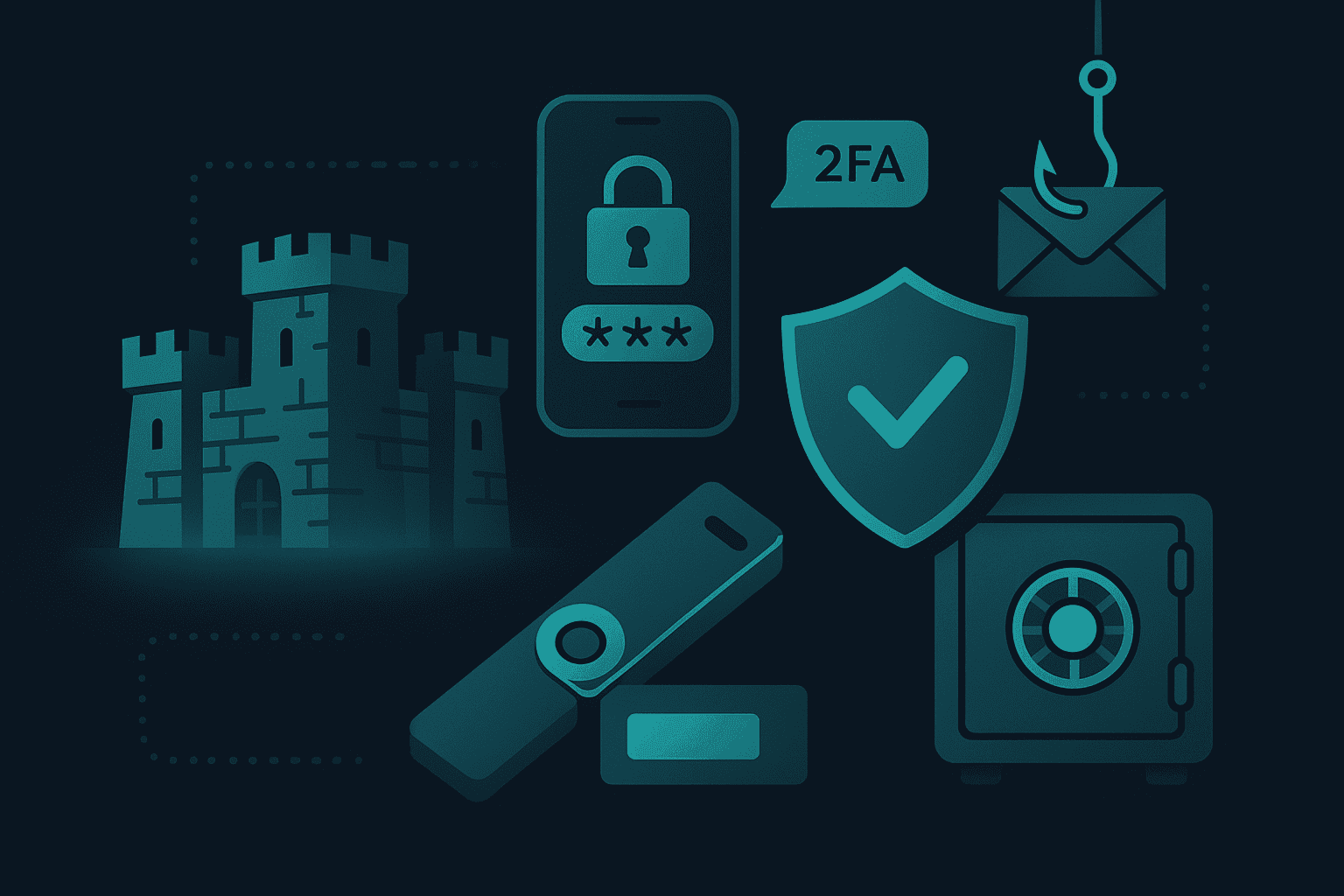
Crypto Exchange Security: How to Protect Your Assets
Exchange security is a shared responsibility. Even the most reputable platforms can experience incidents, and users can still lose funds through phishing or poor account hygiene. This guide explains the core security features to look for - and the actions you can take to protect your assets. For comprehensive exchange security rankings, see our detailed reviews.
Core Security Features to Prioritize
1) Two-Factor Authentication (2FA)
Always enable 2FA. Many top exchanges support Google Authenticator, SMS, and hardware security keys. Hardware keys offer the strongest protection. If you must use SMS, combine it with withdrawal whitelisting.
2) Address Whitelisting
Whitelisting prevents withdrawals to new addresses until a cooldown period passes. This is one of the most effective ways to stop account-drain attacks. Most exchanges in our dataset support it (Binance, Coinbase, Kraken, OKX, Bybit, KuCoin, Bitget, Gate.io, and others).
3) Anti-Phishing Codes
Many exchanges allow you to set an anti-phishing code so legitimate emails can be verified at a glance. This reduces the risk of fake support emails or login links.
4) Cold Storage Practices
Cold storage means keeping assets offline, away from internet-connected wallets. In our dataset, major exchanges report cold storage ratios around 90-98%. Higher cold storage percentages generally reduce the risk of hot wallet compromise.
Insurance Funds and Safety Nets
Several exchanges maintain insurance or protection funds to cover losses from liquidation shortfalls or security incidents. Examples in our dataset include Binance's SAFU fund, Bybit and OKX's derivatives insurance funds, and Bitget's publicly disclosed Protection Fund. These funds are not guarantees, but they can reduce the impact of extreme events.
Historical Exchange Hacks (Timeline)
Past incidents are not the only measure of safety, but they're still useful context. Here is a snapshot from the CryptoScorer dataset:
| Year | Exchange | Incident | Recovered? |
|---|---|---|---|
| 2015 | Bitstamp | ~19,000 BTC | No |
| 2019 | Binance | $40M BTC | Yes |
| 2020 | KuCoin | $280M | Yes |
| 2022 | Crypto.com | $35M | Yes |
| 2025 | Bybit | $1.5B | No |
Best Practices for Users
- Use hardware-based 2FA: Security keys provide the best defense against phishing.
- Enable withdrawal whitelisting: Add trusted addresses and use a cooldown period.
- Verify URLs and emails: Bookmark the exchange login page and use anti-phishing codes.
- Withdraw long-term holdings: Keep only active trading balances on exchanges and move long-term holdings to cold wallets.
- Review PoR reports: Prefer exchanges that publish regular PoR with clear liabilities coverage.
How Security Influences CryptoScore
Security & Reserves are the largest component of CryptoScore (30%). Exchanges that publish frequent PoR, maintain strong cold storage practices, and show transparent incident history score higher. You can see these factors in each exchange profile at /exchanges and learn more about the scoring model in /methodology.
Final Thoughts
Even the best exchange can't protect you from every risk — but good platform security combined with strong user habits can reduce your exposure significantly. Start with 2FA and whitelisting, then evaluate exchanges using a data-driven approach. CryptoScorer's rankings and security metrics make that comparison easier. For more security education, visit our CryptoScorer Academy.
Frequently Asked Questions
What's the most important security feature on crypto exchanges?
Two-factor authentication (2FA) is essential - it prevents 95% of account takeovers. Hardware security keys provide the strongest protection, followed by authenticator apps, then SMS.
Should I keep crypto on exchanges or move it to wallets?
For long-term holdings, use hardware wallets or cold storage. Keep only trading amounts on exchanges. The rule of thumb: don't store more on exchanges than you can afford to lose completely.
How can I verify an exchange's security practices?
Look for proof-of-reserves audits, transparent incident history, insurance coverage, and regulatory compliance. Check security ratings in our exchange reviews and prioritize platforms with strong track records.
What should I do if my exchange account is compromised?
Immediately contact exchange support, change all passwords, review withdrawal whitelisting, check recent activity, and secure other accounts using the same credentials. Enable additional security features once access is restored.